
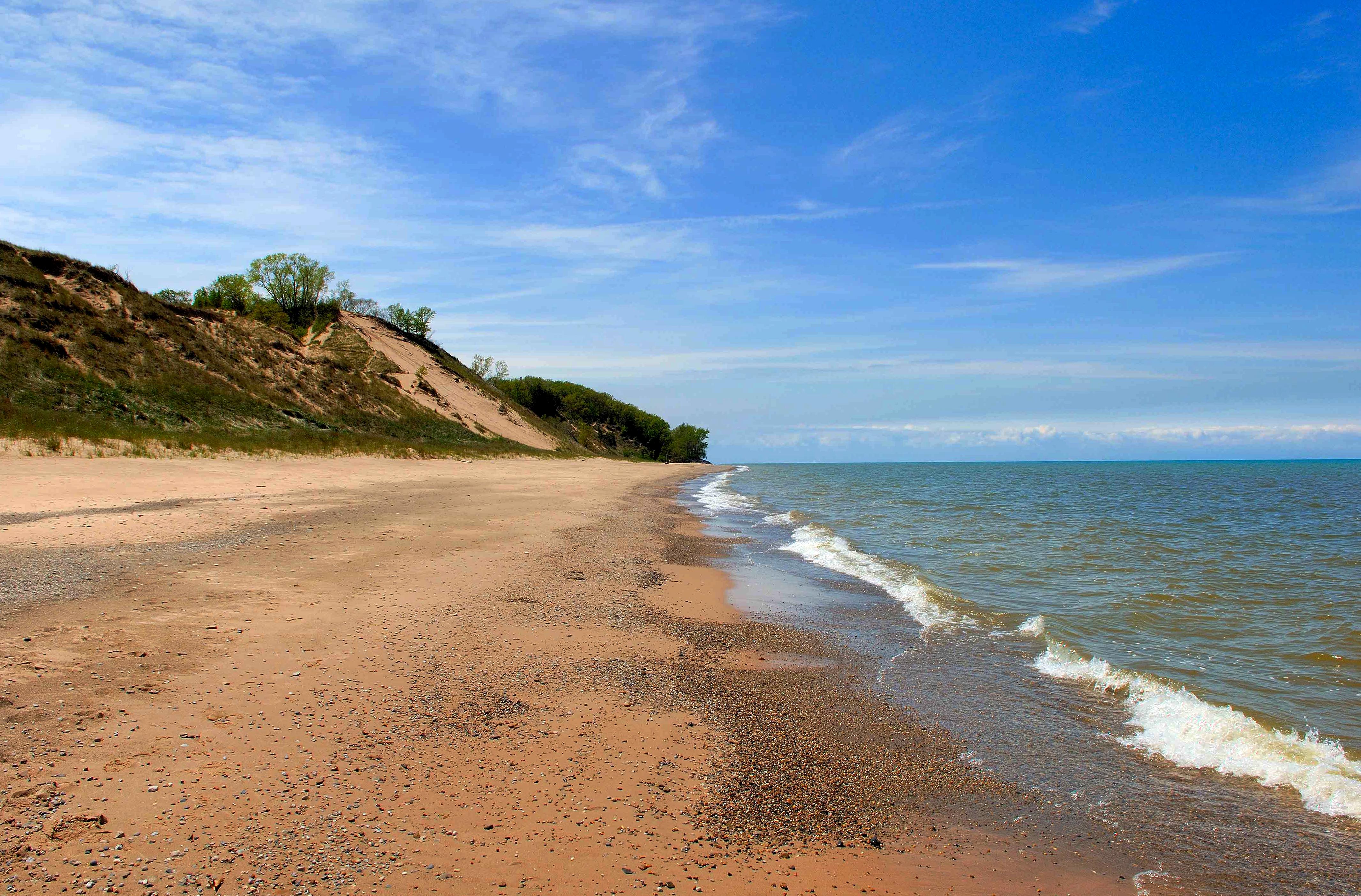
The best hikes in Indiana Dunes National Park trade big-mountain elevation for something rarer: a shoreline where living sand dunes rise nearly 200 feet above the blue horizon of Lake Michigan, all within an hour of downtown Chicago. This compact park packs more than 50 miles of trail across dunes, oak savanna, wetland, and beach, so you can climb a windswept summit in the morning and stroll a quiet bog boardwalk in the afternoon.
What is the best overall hike in Indiana Dunes?
For most visitors the Dune Succession Trail (about 1 mile) is the signature walk. A long staircase carries you over an active foredune to a Lake Michigan overlook, then loops through the four stages of dune ecology that made this park famous among botanists. If you want a bigger challenge, the 3 Dune Challenge tackles the park's three tallest dunes, Mount Jackson, Mount Holden, and Mount Tom, across 1.5 lung-burning miles and roughly 550 feet of cumulative climb in soft sand.
Which trail has the best Lake Michigan views?
Mount Baldy, a rare "living" dune that migrates south a few feet each year, offers the most dramatic shoreline panorama. Access is by ranger-led hike only because of unstable sand, so check the current-year schedule before you go. For a self-guided option, the Cowles Bog Trail (4.7 miles) ends at a secluded beach backed by wooded dunes and is widely considered the park's finest loop.
Are there easy, family-friendly hikes?
Yes. The Great Marsh Trail is a flat 1.3-mile out-and-back on boardwalk and gravel, ideal for birding and strollers. The Pinhook Bog Trail protects a rare quaking bog dotted with carnivorous pitcher plants; it is gated and open on ranger-led visits, so confirm current-year access. Families often pair a short dune walk with a beach afternoon at West Beach, which has its own 1.5-mile succession loop.
When is the best time to hike here?
September and October bring cool air, thinner crowds, and hardwood color across the moraine, while spring floods the marshes with migrating birds. Summer is busy and hot on exposed sand, so start early and carry plenty of water. Winter turns the dunes into a quiet, wind-sculpted landscape, and traction devices help on icy staircases.
What should I know before I go?
Trails weave between the national park and the adjacent Indiana Dunes State Park, which charges its own entrance fee, so read trailhead signs to know where you are. Soft sand makes even short climbs strenuous, and sturdy shoes beat sandals every time. For more Midwest itineraries, browse our guide to national parks in Indiana, compare notes with nearby Cuyahoga Valley National Park, or start from the Indiana Dunes park page. You can also explore every U.S. park through our national parks hub.
FAQ
How long does it take to hike the 3 Dune Challenge?
Most hikers finish the 1.5-mile route in 45 minutes to an hour and a half, depending on fitness. The soft sand and steep pitches make it far harder than the mileage suggests, so pace yourself and rest at each summit.
Do I need a permit to hike in Indiana Dunes National Park?
General day hiking does not require a permit, though there is a park entrance fee and the ranger-led hikes to Mount Baldy and Pinhook Bog require advance sign-up. Check the current-year rules and reservation windows before your visit.
Which national park is closest to Chicago?
Indiana Dunes National Park is the closest, sitting about 50 miles southeast of downtown Chicago along the southern shore of Lake Michigan, roughly an hour's drive without traffic.
Are dogs allowed on Indiana Dunes trails?
Leashed pets are welcome on most trails and beaches, one of the more dog-friendly policies among national parks, though they are restricted from fragile bog areas. Bring water and watch for hot sand on summer afternoons.