
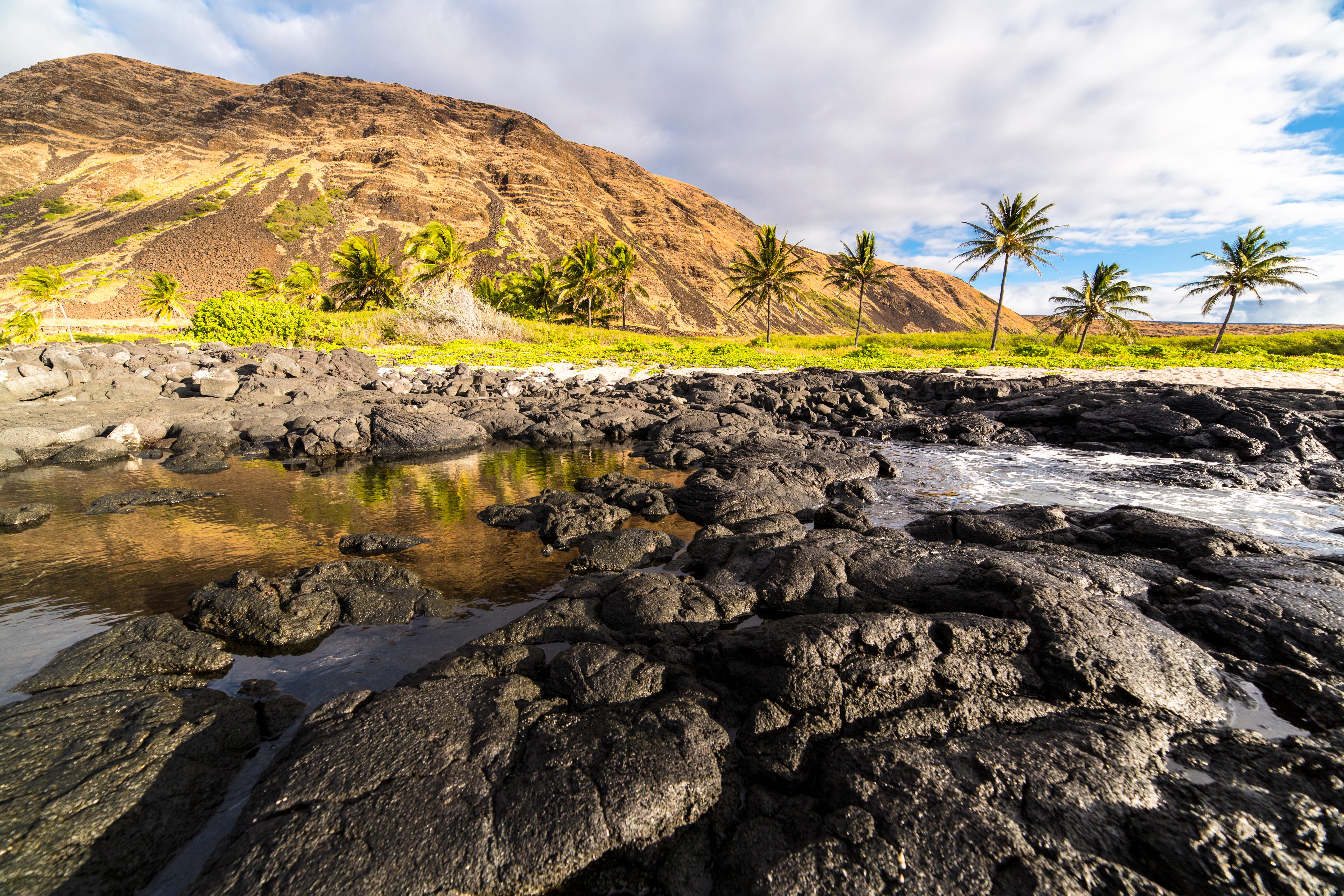
The best hikes in Hawaii Volcanoes National Park range from a two-hour loop across the floor of a solidified lava lake to multi-day backcountry treks over raw pahoehoe, so the right trail depends on how much time, elevation, and heat you can handle. This park protects two of the world's most active volcanoes, Kilauea and Mauna Loa, and its trails let you walk through steam vents, rainforest, and 500-year-old lava fields in a single day.
What is the best hike in Hawaii Volcanoes National Park?
The Kilauea Iki Trail is the signature hike and the one most visitors remember. This roughly 4-mile loop drops about 400 feet through fern-draped rainforest, then crosses the flat, still-steaming floor of a crater that was a churning lava lake during the 1959 eruption. Give yourself two to three hours, carry water, and start early to beat both crowds and afternoon heat. For a shorter taste of the same landscape, the adjacent Crater Rim Trail delivers overlooks of Kilauea caldera and Halemaumau without the descent.
What are the best short and easy hikes?
Several standout walks take under an hour. The paved, wheelchair-accessible Devastation Trail runs about 1 mile round trip across a cinder field buried by the 1959 eruption. The Haakulamanu (Sulphur Banks) Trail leads past hissing, mineral-stained steam vents on a boardwalk. The Puu Loa Petroglyphs Trail, a 1.4-mile round trip off Chain of Craters Road, ends at a boardwalk over more than 23,000 ancient Hawaiian carvings. For birders, the quiet Kipukapuaulu (Bird Park) loop threads an island of old-growth forest surrounded by lava.
What are the best long and backcountry hikes?
Ambitious hikers can link the Napau Trail out toward Napau Crater and the Puu Oo vent, a demanding round trip across open lava that usually requires a backcountry permit; conditions and closures change with volcanic activity, so check the current-year rules at a ranger station before you commit. The ultimate challenge is the multi-day Mauna Loa summit route, which climbs above 13,000 feet and demands permits, cold-weather gear, and altitude acclimatization. Chain of Craters Road itself is a superb "hike as far as you like" option, ending where lava once buried the pavement near the coast.
When is the best time to hike, and what should you know before you go?
Trails are open year-round, but mornings are cooler and clearer, and vog (volcanic smog) is often lighter before midday. Elevations at the summit sit near 4,000 feet, so weather can turn cool and wet quickly even in Hawaii. Bring more water than you think you need, wear sturdy closed-toe shoes for sharp lava rock, and never cross barricades near active vents. Entry fees and any timed or backcountry permit requirements can change, so confirm the current-year rules on the park's official page while planning.
For more Hawaii trip planning, browse our Hawaii Volcanoes National Park guide, compare it with Haleakala National Park on Maui, and see every park in our Hawaii national parks overview. You can also explore all national parks and browse guides by state.
FAQ
How many days do you need to hike Hawaii Volcanoes National Park?
One full day lets you complete the Kilauea Iki loop plus a few short trails like Devastation and Sulphur Banks. Add a second day if you want to drive Chain of Craters Road, visit the petroglyphs, or attempt a backcountry route.
Is the Kilauea Iki Trail hard?
It is moderate. The distance is manageable for most fit hikers, but the 400-foot climb back out of the crater and the exposed, sun-baked crater floor make water and sun protection essential.
Do you need a permit to hike in Hawaii Volcanoes National Park?
Day hikes on established front-country trails do not require a permit, but overnight and some backcountry trips, including Mauna Loa and Napau, do. Requirements and fees change, so verify the current-year rules before you go.
Can you see lava while hiking?
It depends entirely on current eruptive activity, which varies month to month. Even when no surface lava is visible, you can hike across vast recent flow fields, steam vents, and craters. Check the park's current eruption updates before your trip.