
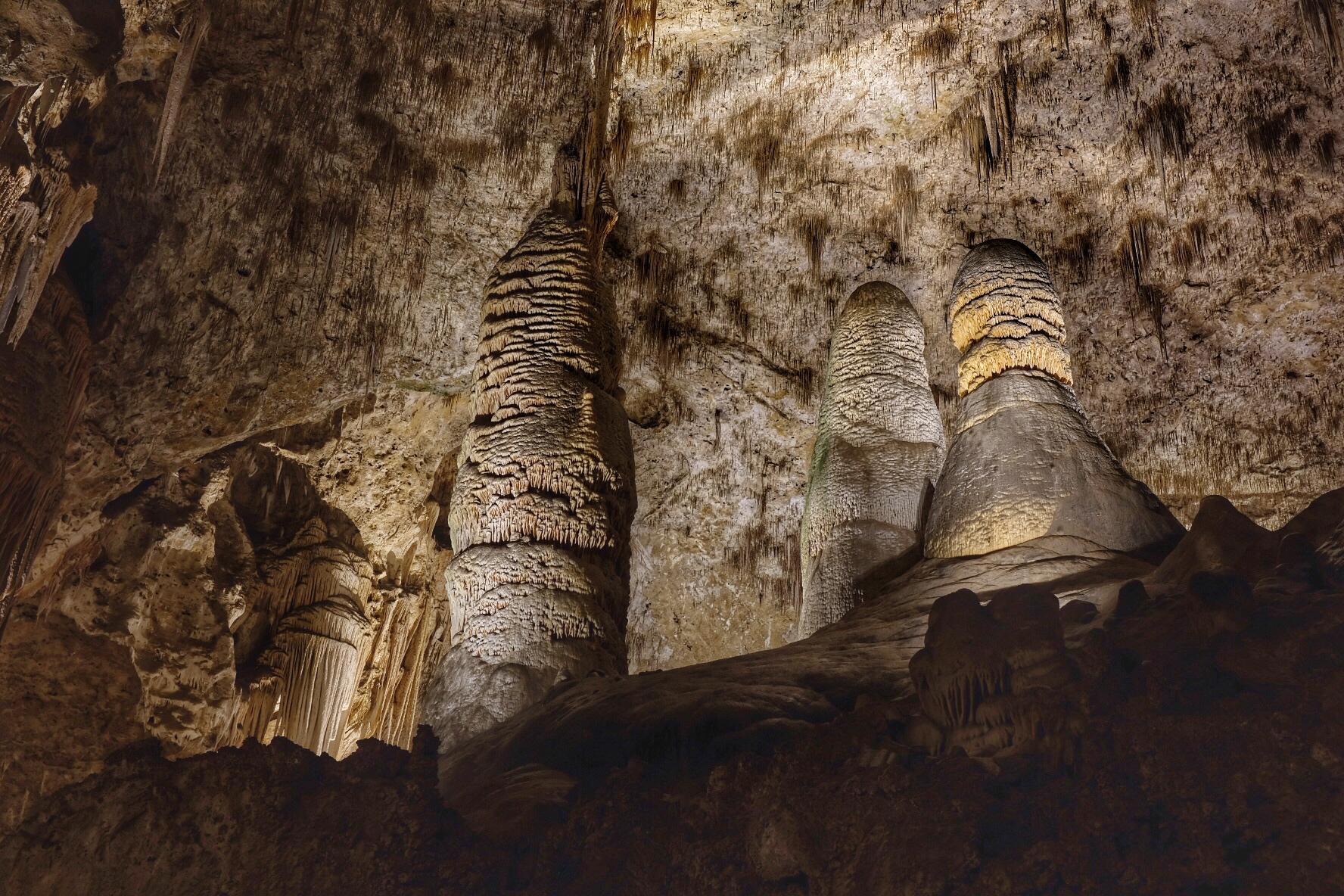
The best hikes in Carlsbad Caverns National Park split into two very different worlds: the famous switchbacks of the Natural Entrance Trail that spiral 750 feet down into the cave, and the quiet Chihuahuan Desert paths above ground that most day-trippers never touch. This New Mexico park is best known for its underground rooms, but it also protects rugged canyons, limestone ridges, and desert flats that reward hikers who linger.
What is the most famous hike in Carlsbad Caverns?
The Natural Entrance Trail is the signature hike. It descends roughly 750 feet over about 1.25 miles of paved switchbacks, following the same route early explorers used to walk into the cavern. It is steep, so most people hike down and ride the elevator back up. At the bottom it connects to the Big Room Trail, a mostly flat 1.25-mile loop past the cave's largest formations. Together they make the classic half-day underground hike.
What are the best above-ground hikes?
Above ground, the desert trails are where you escape the crowds. The Rattlesnake Canyon Trail drops about 5.5 miles round trip into a rugged limestone canyon and is the park's premier backcountry day hike. The Old Guano Road Trail runs roughly 3.7 miles one way along a historic route once used to haul bat guano to the railroad. For a short leg-stretcher, the Chihuahuan Desert Nature Trail is a half-mile loop near the visitor center with signs identifying the agave, sotol, and prickly pear that define this ecosystem. Yucca Canyon and Juniper Ridge trails climb toward the escarpment for wider views and far more solitude.
Is the Big Room Trail worth it?
Yes. The Big Room Trail is the most accessible way to experience Carlsbad Caverns on foot. The full loop is about 1.25 miles and mostly level, with a shorter accessible segment of roughly 0.6 miles for those who want a quicker route. You will pass landmark formations like the Bottomless Pit, Giant Dome, and Rock of Ages without any of the steep grade of the Natural Entrance.
When is the best time to hike Carlsbad Caverns?
Inside the cave the temperature holds near 56 degrees Fahrenheit all year, so underground hiking is comfortable in any season. Above ground it is a different story: the desert bakes in summer, so plan surface hikes for fall through spring, start early, and carry far more water than you think you need. Spring also brings blooming cactus and cooler canyon air.
What should you know before you go?
Backcountry trails like Rattlesnake Canyon require a free permit, and the routes are rocky and lightly marked, so bring a map and sturdy shoes. Entry to the cave itself often uses a timed-entry or reservation system, so check the current-year rules before you drive out. If you are building a wider trip, Carlsbad pairs naturally with Guadalupe Mountains National Park just across the Texas line, and more ambitious road-trippers add Big Bend National Park to the south. You can compare nearby options on our New Mexico and Texas park guides, or browse every park on the PeepTrip parks hub.
FAQ
How long is the Natural Entrance Trail?
The Natural Entrance Trail is about 1.25 miles long and descends roughly 750 feet into the cave. Most hikers walk down and take the elevator back to the surface.
Are there dog-friendly trails in Carlsbad Caverns?
Pets are not allowed on park trails or inside the cave. A kennel is available at the visitor center for a fee, and trained service animals are permitted. Check the current-year pet rules before arriving.
Do you need a reservation to hike into the cave?
Carlsbad Caverns frequently uses a timed-entry reservation for cave access. Availability changes seasonally, so confirm the current-year reservation and fee rules on the official park page before your visit.
What is the closest national park to Carlsbad Caverns?
The closest national park to Carlsbad Caverns is Guadalupe Mountains National Park, about 35 miles southwest across the New Mexico–Texas border, making the two easy to combine in one trip.