
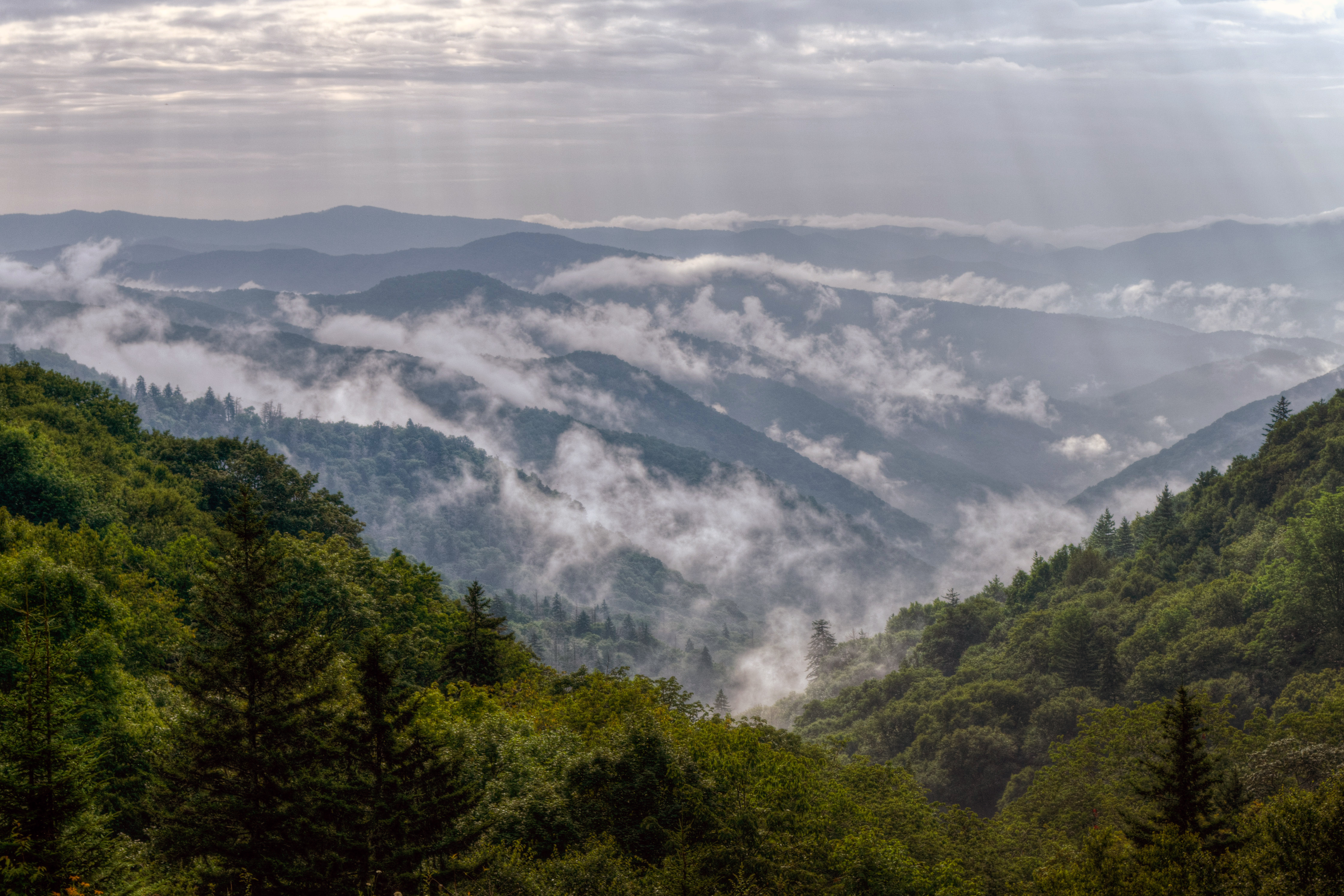
The best hikes in Great Smoky Mountains National Park deliver misty ridgelines, thundering waterfalls, and the richest biodiversity of any park in the East, all within a short drive of Gatlinburg and Cherokee. This guide sorts the standout trails into summit climbs, waterfall walks, and easy family loops, explains the best season for each, and answers the timing and safety questions first-time visitors ask most so you can build the perfect Smokies itinerary.
What is the best hike in the Smokies?
The Alum Cave Trail to Mount LeConte is the signature outing, climbing past Arch Rock and Inspiration Point to one of the highest peaks in the park. The full round trip to the summit runs about 11 miles, but turning around at Alum Cave Bluffs makes a rewarding 5-mile option with big payoff for less effort. Chimney Tops is shorter and steeper, while Charlies Bunion along the Appalachian Trail serves up dramatic exposed views. These routes showcase why Great Smoky Mountains National Park is the most visited national park in the country.
Which hikes have the best waterfalls?
The Smokies are famous for cascades. Ramsey Cascades is the tallest waterfall in the park, reached by a strenuous 8-mile round trip through old-growth forest full of towering hemlocks and tulip trees. Grotto Falls is unique because the trail passes behind the falling water, and it is short enough for families. Laurel Falls is paved and popular, while Abrams Falls rewards a moderate walk with a powerful plunge. Carry traction on wet rocks and never climb on slick waterfall ledges, which cause serious accidents every year.
What are the best viewpoint hikes?
For big views with less effort, Andrews Bald is a moderate 3.6-mile round trip to a grassy summit meadow, and the Clingmans Dome observation tower is reached by a steep but paved half-mile path to the highest point in the park. Charlies Bunion and the Chimney Tops deliver the most dramatic rocky overlooks for those willing to climb. On clear days the layered blue ridges stretch for miles in every direction.
Are there easy family hikes?
Yes. The Gatlinburg Trail and Oconaluftee River Trail are flat, dog-friendly paths that follow rivers and are perfect for young children. Cades Cove offers gentle nature trails alongside abundant wildlife viewing, including black bears and white-tailed deer. Because the park straddles two states, you can pair a Tennessee-side visit with quieter trailheads on the North Carolina side. See our Tennessee and North Carolina guides for regional planning.
What should you pack for a Smokies hike?
Weather in the Smokies changes fast and higher elevations run much cooler than the valleys, so bring layers and a rain shell even on sunny mornings. Pack at least two liters of water, sturdy shoes with grip for muddy and rooty trails, a map because cell service is patchy, and bear awareness: store food securely and never approach wildlife. Start early to find parking at popular trailheads like Alum Cave and Laurel Falls.
When is the best time to hike in the Smokies?
Late spring brings wildflowers and rushing water, summer offers full access to high-elevation trails, and October delivers world-class fall color that also draws heavy crowds. Winter can close Clingmans Dome Road and higher routes. Fog is common year-round, so start early. Hikers craving crisp autumn color often combine the Smokies with Shenandoah National Park to the north.
FAQ
Do you need a permit to hike in the Smokies?
Day hiking does not require a permit, though a parking tag is required for vehicles. Backcountry camping needs a permit, and rules change annually, so check the current-year rules before you go.
How hard is the Alum Cave Trail?
The stretch to Alum Cave Bluffs is moderate, while continuing to Mount LeConte is strenuous with steep, rocky sections and cable handholds near the top.
Are dogs allowed on Smoky Mountains trails?
Pets are allowed only on the Gatlinburg Trail and Oconaluftee River Trail. They are prohibited on all other park hiking trails to protect wildlife.