
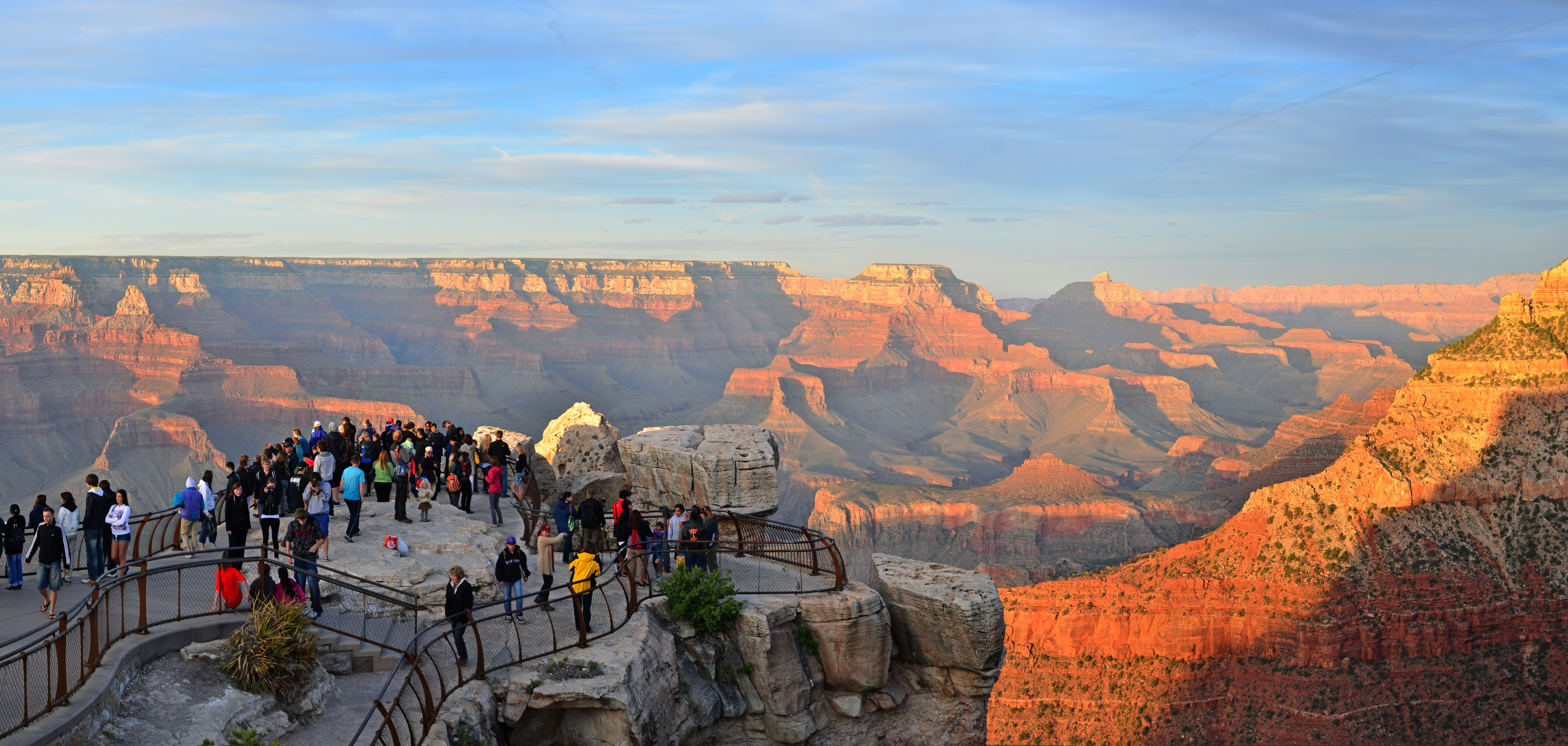
The best hikes in Grand Canyon National Park range from flat rim strolls with jaw-dropping views to strenuous descents toward the Colorado River, so there is a route for every fitness level. Hiking here is unlike anywhere else: you begin at the top and climb out at the end, when you are most tired. This guide walks through the canyon's top trails, how hard each one is, and how to hike them safely.
Are the hikes in the Grand Canyon hard?
They can be. Rim trails are easy and mostly level, but any hike below the rim means a tough uphill return in heat and thin air. The Park Service warns against hiking to the river and back in a single day. Match the trail to your fitness, and read our full Grand Canyon National Park guide before you go, along with our overview of Arizona parks.
Rim Trail (easy)
The Rim Trail is the best choice for casual walkers and families. It follows the South Rim for about 13 miles, mostly paved and nearly flat, with frequent shuttle stops so you can walk as little or as much as you like. Sunset stretches between Mather Point and Yavapai Point are especially memorable, offering classic canyon panoramas with minimal effort.
Bright Angel Trail (moderate to strenuous)
Bright Angel is the canyon's most famous corridor trail, with shade, water stations, and rest houses. Day hikers can turn around at Mile-and-a-Half or Three-Mile Resthouse for a satisfying taste of the inner canyon. Going farther to Havasupai Gardens is a big day. Start at dawn, carry plenty of water, and budget twice as long for the climb out.
South Kaibab Trail (strenuous)
South Kaibab delivers the canyon's most dramatic ridgeline views, with iconic stops at Ooh Aah Point, Cedar Ridge, and Skeleton Point. It is more exposed than Bright Angel and has no water, so it is best hiked early and in cooler months. Many hikers descend South Kaibab and climb out via Bright Angel for the best of both trails.
North Rim hikes
If you visit the higher, cooler North Rim, the Bright Angel Point trail is a short paved must-do, while the North Kaibab Trail drops into the canyon for ambitious hikers. The North Rim is only open seasonally, roughly mid-May through October, so confirm current-year opening dates before planning a trip there.
When should you hike, and how to stay safe?
Spring and fall offer the safest temperatures; summer inner-canyon heat can be deadly. Always carry more water than you think you need, eat salty snacks, wear sun protection, and turn around with plenty of energy left for the climb. Never attempt rim-to-river-to-rim in one day. Check current-year trail, water, and shuttle status before every hike.
FAQ
What is the easiest hike in the Grand Canyon?
The Rim Trail is the easiest, offering flat, paved walking with shuttle access and continuous views. You can do as little as a few hundred yards between overlooks.
Can you hike to the bottom of the Grand Canyon in a day?
You can descend to the river in a day, but hiking back to the rim the same day is strongly discouraged and dangerous. Most people camp at the bottom or stay at Phantom Ranch.
Do you need a permit to hike the Grand Canyon?
Day hiking on the corridor trails needs no permit, but any overnight backcountry trip requires one. Confirm the current-year permit rules well in advance, as demand is high.
Which rim has better hiking?
The South Rim has the most famous and accessible trails and is open year-round, while the North Rim is higher, cooler, and quieter but only open seasonally.