
The best hikes in Death Valley National Park trade shade for scale, leading you across the lowest, hottest, and driest ground in North America to salt flats, sculpted canyons, and surprisingly cool mountain summits. Spanning more than three million acres across California and Nevada, this desert park packs astonishing variety into a single visit, and the right trail depends heavily on the season and the temperature.
What are the best short hikes in Death Valley?
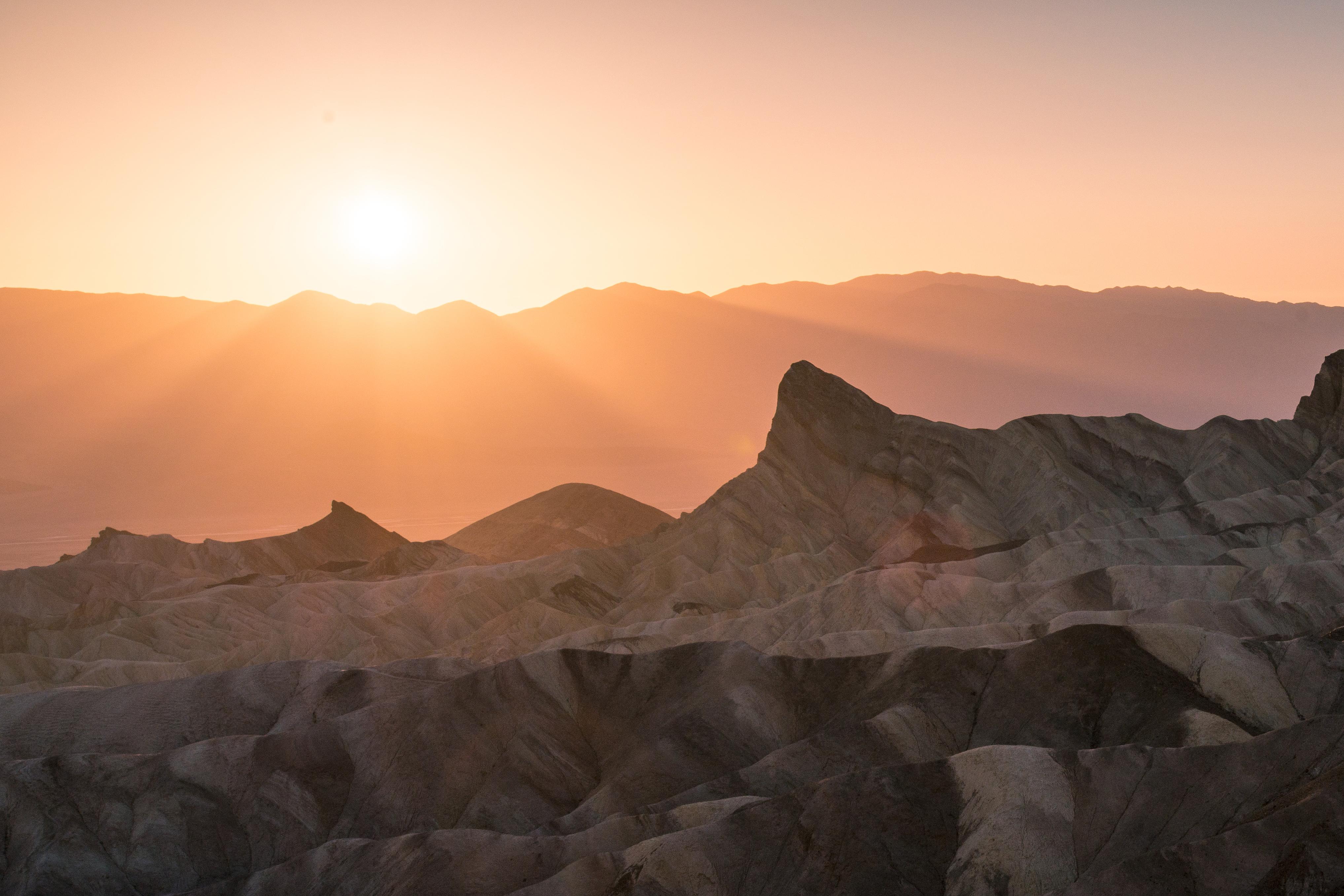
For a first taste, walk the boardwalk at Badwater Basin, 282 feet below sea level, where hexagonal salt polygons stretch toward the horizon. Golden Canyon is the park’s most popular trail, an easy-to-moderate route through glowing badlands that connects to the Red Cathedral spur and the Gower Gulch loop. Nearby, the short climb to Zabriskie Point at sunrise frames rippled, honey-colored hills that look almost molten in the early light. Each of these delivers classic Death Valley scenery in under a couple of hours.
Which hikes have the most dramatic scenery?
Mosaic Canyon near Stovepipe Wells narrows into polished marble walls you can reach out and touch, while the Natural Bridge Canyon trail leads to a massive rock span carved by flash floods. For adventurous hikers, the dunes at Mesquite Flat glow at dawn and dusk and offer a soft, trail-free scramble. These routes reward early starts, both for cooler air and for the low-angle light that makes the rock and sand come alive.
Are there any cool, high-elevation hikes?
Yes. When the valley floor bakes, head up. Telescope Peak climbs to 11,049 feet through pinyon and bristlecone pine, with snow often lingering into spring and views that span from Badwater to Mount Whitney. Wildrose Peak is a shorter but still strenuous alternative. These high-country trails can be 30 to 40 degrees cooler than the basin, making them the smart choice in the warmer months when low-elevation hiking becomes dangerous.
When is the best time to hike Death Valley?
November through March is by far the safest and most comfortable window, with mild days and cold, clear nights ideal for stargazing. Summer temperatures on the valley floor routinely top 120°F, so any warm-weather hiking should be limited to the high peaks and early mornings. Always carry far more water than you think you need and check current-year road and heat-advisory conditions before you go. Combine Death Valley with Joshua Tree National Park for a classic desert road trip, and browse our guides to California national parks and Nevada national parks. For maps and current alerts, start at Death Valley National Park before you set out.
How do you stay safe hiking in the desert?
Heat is the real hazard here. Start hikes at first light, carry at least a gallon of water per person per day, and turn around long before you feel tired. Wear a sun hat, light long sleeves, and sturdy shoes for sharp rock and gravel. Fuel up and top off water in Furnace Creek or Stovepipe Wells, since services inside the park are sparse and cell coverage is almost nonexistent across the backcountry.
FAQ
Is it safe to hike Death Valley in summer?
Low-elevation trails are dangerous and often discouraged in summer due to extreme heat. Stick to high peaks like Telescope Peak or hike only at dawn, and check current-year heat advisories first.
Do I need a permit to hike in Death Valley?
Day hiking does not require a permit, though backcountry camping registration is encouraged. Confirm the current-year rules before your trip.
What is the easiest hike in the park?
The flat Badwater Basin boardwalk is the easiest, offering iconic salt-flat views with minimal effort and no elevation gain.